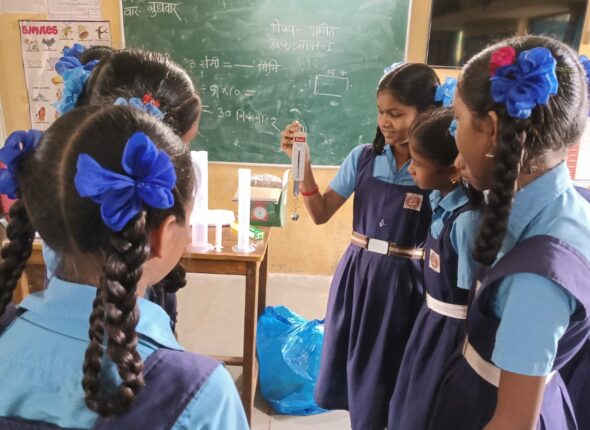
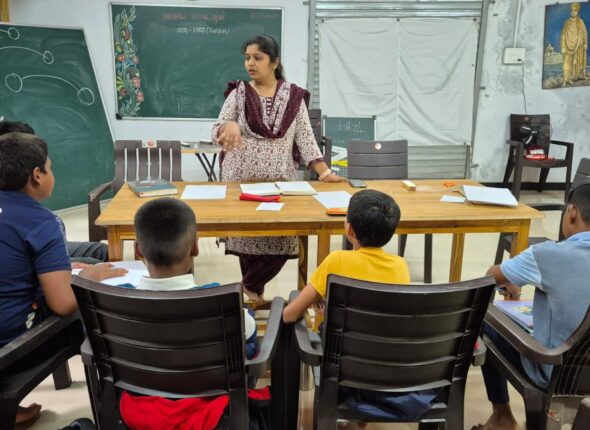
Most schools in rural and tribal areas lack adequate infrastructure. The infrastructure required to support meaningful learning is almost absent. Many schools do not have libraries, and even where libraries exist, they often lack sufficient books, encyclopaedias, maps, and periodicals. Students rarely find material for extra reading.
In some schools and organisations, guidebooks are provided instead of textbooks, and these become the only additional reading material available. Providing guides is highly inappropriate, as it encourages rote learning. Teachers are so burdened with routine school activities that they are unable to provide additional information or even narrate stories that could enrich learning.
Considering this situation, Adhyayan Sanstha decided to start a basic STEM (Science, Technology, Engineering, and Mathematics) magazine in Marathi.
Several key decisions were made to ensure that the magazine would meaningfully contribute students’ learning. The magazine would include important scientific and technological advancements, environmental issues, quizzes, mathematics-based articles, and various puzzles. The cover page would present information about fundamental science, while the back page would highlight fascinating developments in engineering and technology.
I was given the responsibility of organising all aspects of the magazine. The primary purpose of the magazine was to generate curiosity, introduce the scientific method, promote understanding of mathematics and technology, and develop basic thinking skills.
All senior colleagues of Adhyayan in Mumbai met to decide the nature and direction of the magazine. It was decided that the articles would primarily target middle school and high school students. However, fundamental concepts of science and mathematics would not be diluted, even if they appeared challenging. We wanted to convey to society that genuine learning requires effort in reading and understanding. Teachers were also trained to use the magazine effectively.
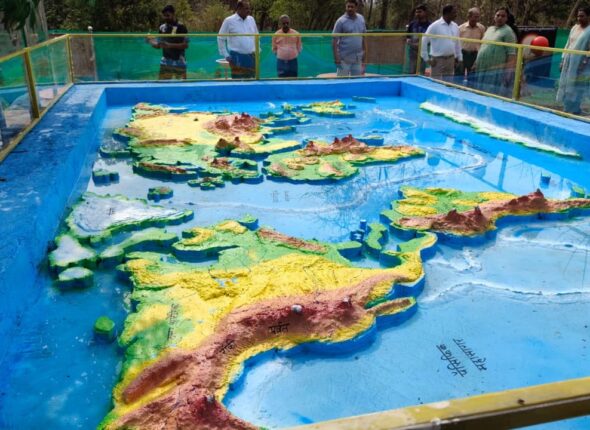
Over the last 48 months, we have published nearly 40 issues. (During the summer vacation, we publish a bimonthly issue instead of a monthly one, as schools in India remain closed for nearly two months.) The summer bimonthly issues focus on science, technology, mathematics, and geography in such a way that students must calculate, analyse, or think critically to understand the content. This initiative supports schools, as many students tend to lose their habit of calculation and analytical thinking during long vacations. The summer bimonthly issue has proved to be a very effective idea.
The articles, as well as the front and back pages of the magazine, have been highly appreciated by teachers, teacher educators, and students.
We have linked the magazine with science clubs in different schools. The articles provide content and structure to organise science club activities. Science club members are encouraged to present the information from Sampark in the form of stories or discussions to other students.
We also conduct an annual quiz competition at four different locations, in which 32 schools participate.
The magazine is currently read by more than 700 students in our project area. From January 2026, we have started publishing the magazine online (e-Sampark) to address financial challenges.
Anusaya Hondule
Science-Geography Project Officer
Adhyayan Santha

 Adhyayan Sanstha